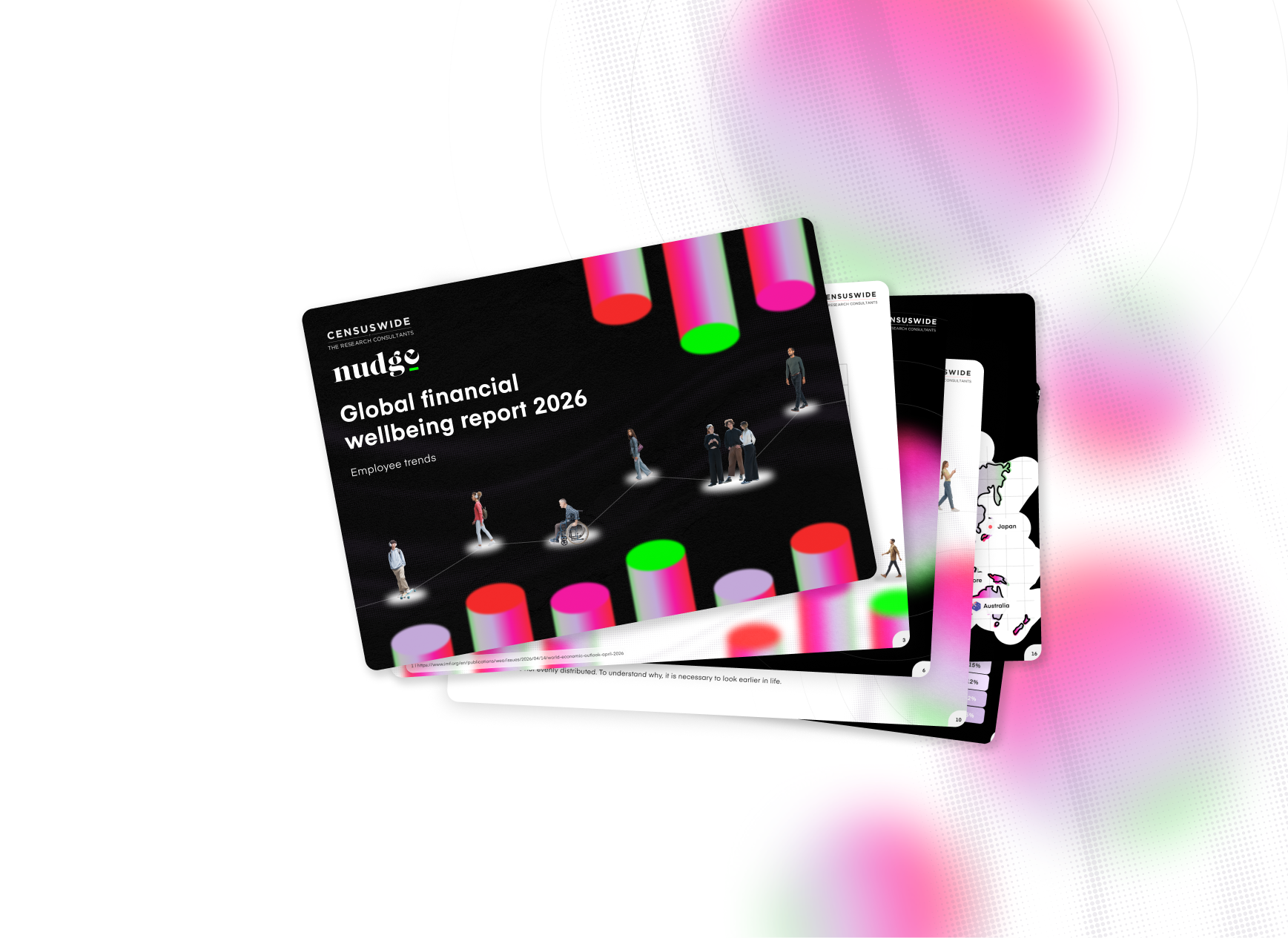
2026 Global financial wellbeing research

Employee trends

Financial volatility is now part of everyday life

As pressure has grown, financial literacy is falling. Down 22% in three years, employees are less equipped to respond than ever. The impact is far-reaching: shaping how people respond to life events, how they engage with support, and how resilient they really are when it matters most. 

Spanning 11,510 employees across 17 countries, our 2026 Global financial wellbeing research gives you a definitive view of what your workforce is experiencing – and what it means for you as an employer. 

Download Global financial wellbeing report

Key findings

Key findings

Savings behavior: Employees with good financial literacy are more than twice as likely to have savings (88% vs. 42%) and far less likely to be without a retirement fund (8% vs. 44%).

Financial vulnerability: Employees who are neutral about their finances are more likely to have little or no emergency savings (23% vs. 19% average) and nearly half have saved less than one month's salary (31% vs. 22%).​

Employer support: Employees who receive financial wellbeing support are significantly more likely to feel cared for by their employer (78% vs. 44%) and more committed to staying.

Download report

2026 Global financial wellbeing research webinar

2026 Global financial wellbeing research webinar

Access perspectives and key insights:

  • The hidden risk: Why the employees who appear fine are often the most financially vulnerable, and what the data shows about disengagement.
  • Life events and fragility: How life events expose financial fragility, and why higher earners aren't as insulated as you'd expect.
  • What good looks like: How Delta Air Lines and DLA Piper are supporting their workforce's financial outcomes.
Watch on-demand